The air in June already carries a hint of summer, even though the summer holidays haven’t truly begun. For me, this is a special time—caught between the rhythm of daily routine and the anticipation of planning those weeks where I can completely break away. It was against this backdrop that I seriously explored PGL for the first time and discovered the page for PGL’s Summer Extreme Camps.
The appeal went far beyond just “browsing summer camps”; it immediately drew me into a vivid scenario: what would it be like to spend the entire summer immersed in surfing, whitewater rafting, and high-ropes challenges? Seeing core activities like the Surf Week, whitewater kayaking, and high-ropes extreme challenge camps integrated into a single system made it clear that this wasn’t just a collection of disjointed experiences, but a comprehensive developmental pathway for extreme summer sports.
June Anticipation: Imagining the “Extreme” Before the Break
In June, I was still toggling between school and my daily routine, yet my mind had already shifted into “summer holiday mode.”
What truly drew me to PGL was that it didn’t just offer a simple list of activities; it structured surfing, whitewater kayaking, and high-ropes challenges into a continuous training system. The “Week-Long Residential” format left a strong impression—it meant that once you arrived, it wasn’t just about “trying something out for the day,” but about being fully immersed in a specific sporting discipline for seven consecutive days.
While looking at the details in June, I found myself instinctively visualizing the daily rhythm: morning training sessions, afternoon practical application, and evening team activities. Even before setting off, my body was already gearing up for the experience.
Camp Setup: Moving from “Sign-up” to “Entering a System”
When I finally decided to sign up for PGL’s Summer Extreme Camps, I realized that the experience was less like attending a standard course and more like entering a carefully designed environment for personal growth.
A key feature is that teenagers aged 12–17 are placed into mixed international groups. Despite coming from diverse linguistic and cultural backgrounds, they are united by a shared goal: learning extreme sports.
The daily schedule is clearly structured, yet it never feels mechanical or repetitive. It is more like a continuous, progressive structure: training, facing challenges, reviewing, and moving on to the next stage. Time is fully packed, yet every segment holds clear significance.
Surfing Week: Visualizing that first wave back in June
Surfing Week was an experience I had mentally simulated over and over again before I even set off.
In PGL’s surfing curriculum, instructors are certified by surfing associations, and every movement is broken down into fundamental steps; however, true learning only happens through repeated time in the water.
When I first read the program description in June, I sensed that this wouldn’t be about “learning quickly,” but rather about “failing repeatedly and adjusting.” Once I got into the rhythm, that proved true: instability, poor timing, and misjudging waves were the norm in the early stages.
Yet, the moment I truly stood on the board and was propelled forward by a wave, the feeling wasn’t just excitement—it was a quiet sense of “finding the rhythm.” It was as if my body had finally understood the language of the ocean.
Whitewater Kayaking: Mentally rehearsing rapid navigation back in June
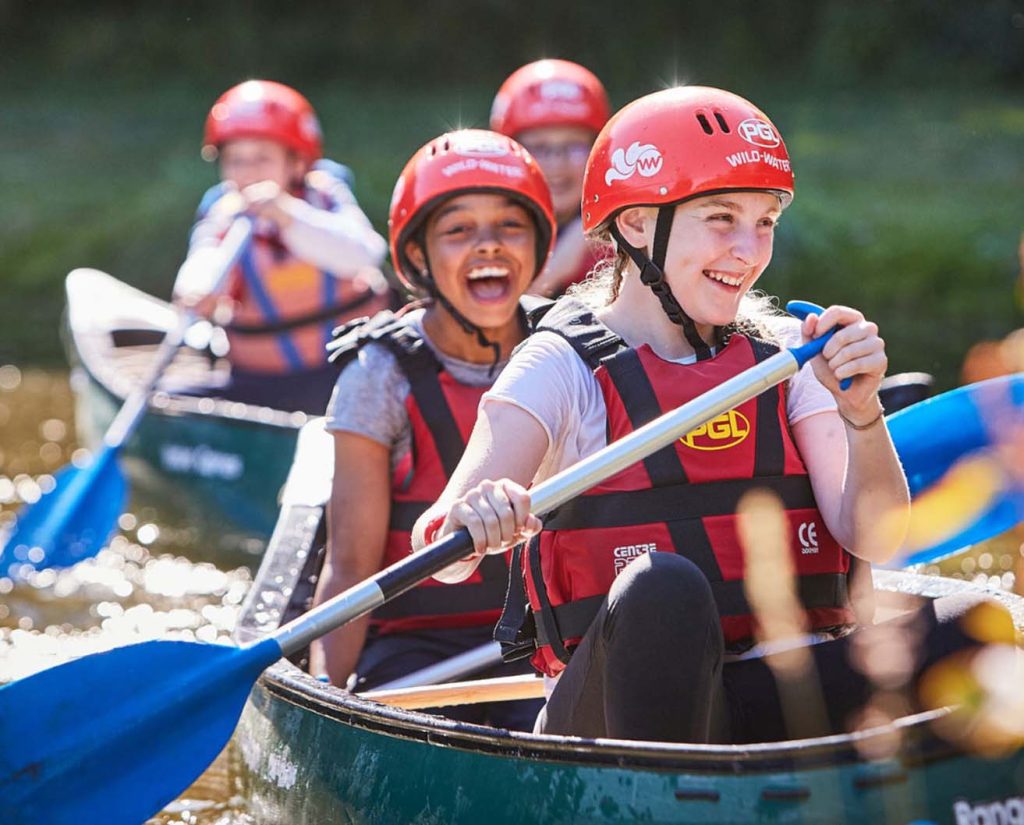
When I first reviewed the program details in June, whitewater kayaking struck me as the most “real-world” activity of the lot.
It wasn’t just about playing in the water; the curriculum explicitly included Level 1 instructor training, teamwork, and safety assessment. PGL’s design clearly leaned toward training decision-making skills.
Before even participating, I could picture the scenario: shifting currents, route adjustments, coordinating with teammates, and the need for split-second decisions on direction.
The actual experience fully validated those expectations—there wasn’t much time to ponder whether a move was “right” or “wrong”; it was simply a matter of “making a choice right now.”
Reviewing my movements later that evening, I suddenly realized that this training was actually honing one’s decision-making speed and team communication skills.
High-Altitude Challenge Camp: The activity that first triggered a psychological response back in June
If the first two activities remained largely at the “physical” level, the high-altitude challenge camp began to trigger a psychological reaction the moment I saw the materials in June.
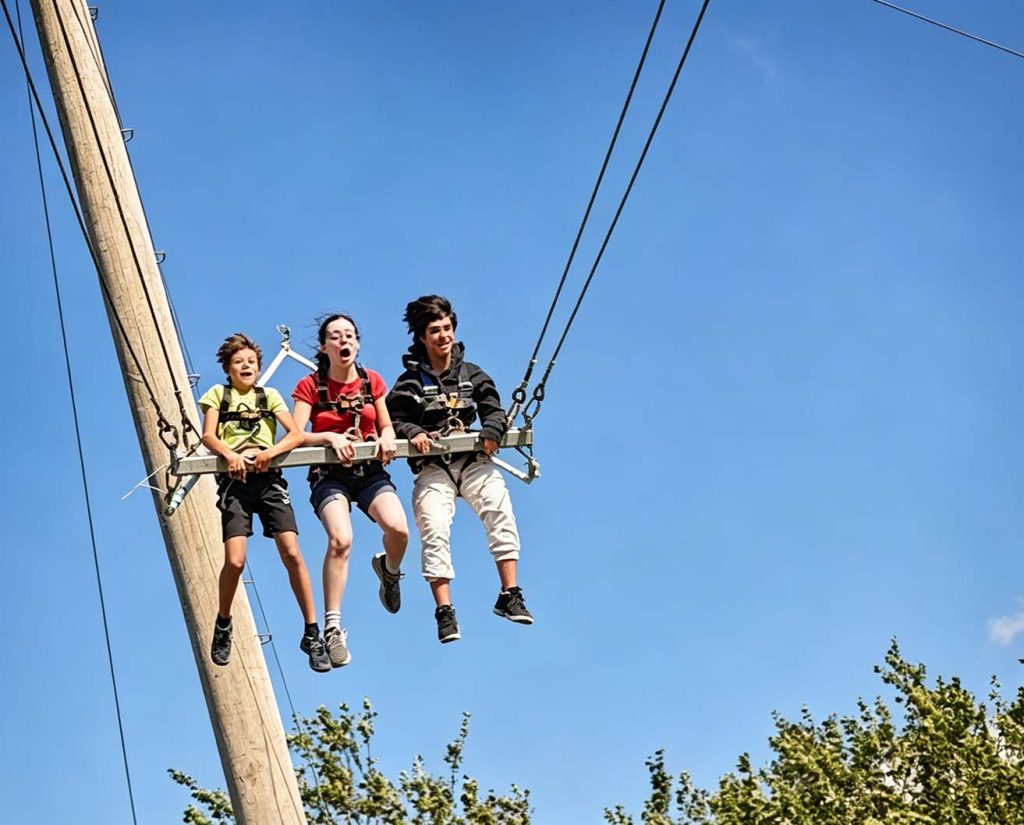
High ropes courses, climbing towers, and balance beams—within PGL’s system, these elements are designed to train one’s ability to handle psychological pressure. When I first saw these activities on the webpage, I had already started mentally simulating what it would feel like to stand there. It wasn’t until I actually experienced them that I realized reality was slower and quieter than I had imagined.
The sound of the wind, the swaying, and the palpable presence of the safety harness seemed to amplify every single step. Yet, strangely, once you took that first step, the fear didn’t vanish; instead, it was reframed into a state of mind that allowed you to keep moving forward.
Seven Days of Immersive Living: The Gap Between June’s Plans and Reality
Back in June, my understanding of the “seven-day residential program” was somewhat abstract, but once I actually entered the PGL system, the concept became very concrete.
Daily life itself was part of the training.
There was a fixed daily rhythm: training, meals, team activities, and debriefing sessions. There was no wasted time, yet nothing felt like meaningless filler.
The evening team competitions, in particular, made me realize that this wasn’t just about improving athletic ability; it was about constantly honing communication and collaboration skills.
The Perspective from June: Why PGL Was So Appealing
Looking back, the fundamental reason I was drawn to PGL in June wasn’t a desire to “try extreme sports,” but rather the vision of structured personal growth it offered.
Surfing, kayaking, and high-ropes challenges weren’t just three separate activities; they represented three dimensions of capability—physical control, decision-making speed, and psychological breakthroughs—all underpinned by teamwork.
Back in June, this combination was still just a “plan,” but it was clear enough to make me look forward to the summer ahead.
The End of June: Summer Vacation Not Yet Begun, But Already Booked
By the end of June, I no longer viewed PGL merely as a webpage to browse, but as the gateway to a system I was about to enter.
All that remained was to wait for the summer vacation to actually begin.
And PGL’s “Summer Extreme Camps” had shifted from something that “looked interesting” to an experience that was definitely going to happen.
The summer hadn’t officially started yet, but in a sense, it was already underway.